
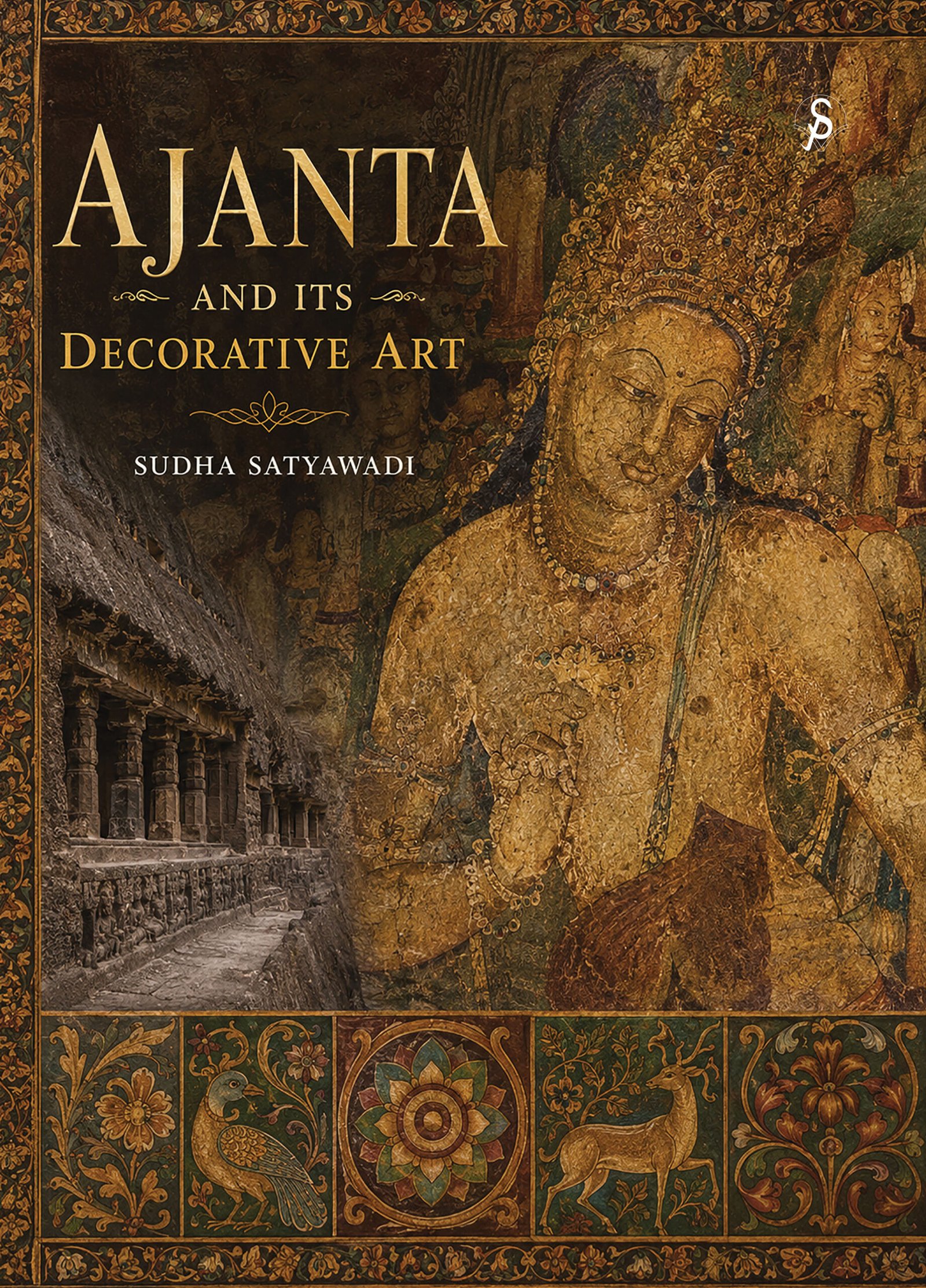


Ajanta & Its Decorative Art by Sudha Satyawadi (Hardcover)
Original price was: ₹1,995.00.₹1,795.00Current price is: ₹1,795.00.
- Publisher : Shubhi Publications
- Publication date : 3 August 2026
- Language : English
- Print length : 128 pages
- ISBN-10 : 8182907128
- ISBN-13 : 978-8182907126
- Reading age : 18 years and up
- Item Weight : 900 g
- Dimensions : 30 x 22 x 2 cm
- Country of Origin : India
- Packer : Shubhi Publications
- Generic Name : Book
Ajanta is the greatest center of early Buddhist art in India, renowned for its creativity and artistic excellence. In the realm of painting, these caves are virtually unique in the world of art. No other source, including literature, equals their significance. A single image from Ajanta can communicate meaning better than a thousand words, offering a powerful visual representation of Buddhist ideals and sentiments. Discovered by a British soldier in 1819, Ajanta represents a masterful combination of three arts: architecture, sculpture, and painting. The paintings on the walls and ceilings of the caves constitute the true beauty of Ajanta. These artworks span different historical periods, ranging from 200 BC to 650 AD. Caves 1, 2, 16, and 17 contain the finest examples, serving as a vivid record of contemporary life. Three dominant themes emerge in these paintings: the life of Gautama Buddha, the Jataka tales, and intricate ceiling decorations. This book focuses specifically on the decorative designs within the caves. Though lesser-known, the ceiling paintings hold a wealth of artistic designs and patterns that were popular during that era. They convey stories, legends, beliefs, and glimpses of the contemporary socio-political environment. Beyond their historical and artistic value, they are highly pleasing to the eye. In the darkness of the shrine, these ceiling paintings enhance the beauty of the caves. They are rich with symbolic motifs, and the designs are closely related to water cosmology. The ceilings depict celestial beings such as Kinnaras, Gandharvas, Vidyadharas, and Yaksha couples, all subjects of Kubera’s kingdom. Yakshas represent the genii of the earth and vegetation. In the folk religion of that time, Yakshas were worshipped as protective spirits; in the Ajanta ceilings, these figures are aligned with the worship of the Buddha. The decorations also feature ornaments, flowers, fruits, and animals that symbolize wealth and prosperity. Both animal and human figures are permeated with naturalness and grace. These paintings were created by craftsmen and artists who received patronage from the temples. They were fully devoted to their work and held a position of high social standing. Recognition of their talent and genius encouraged them to specialize in specific art forms. This dedication led to the creation of fabulous, high-quality paintings that reached the heights of classical art. The Ajanta style also inspired foreign artists, who carried its influence far and wide to places like China, Korea, Sri Lanka, Tibet, and Japan.
There is £4.99 charge for delivery under £50 Orders. Additional charges will be imposed by our couriers for delivery to remote area, a surcharge may be levied to cover carriage to these areas.

Kashi Shaivism : The White Diamond (Hardcover)
Original price was: ₹1,295.00.₹1,165.00Current price is: ₹1,165.00.
Ramayana in World Art and Thought
Original price was: ₹2,995.00.₹2,695.00Current price is: ₹2,695.00.
The Life & Legacy of Maharaja Ranbir Singh
Original price was: ₹1,995.00.₹1,795.00Current price is: ₹1,795.00.
Life & Legacy of Maharaja Hari Singh
Original price was: ₹1,495.00.₹1,350.00Current price is: ₹1,350.00.
 Ajanta & Its Decorative A...
Original price was: ₹1,995.00.₹1,795.00Current price is: ₹1,795.00.
Reviews
There are no reviews yet.