
Sale

Anatomy of the Raj – Russian Consular Report
Original price was: ₹1,295.00.₹1,095.00Current price is: ₹1,095.00.
- Publisher : Shubhi Publications
- Author : Suhas Chakravarty
- Binding : Hardcover
- Edition : 2009
- Language : English
- ISBN-10 : 8182901588
- ISBN-13 : 978-8182901582
- Print length : 470 pages
- Item Weight : 600 g
- Dimensions : 23 x 15 x 3.5 cm
The author maintains that British response to Indian situations was determined but it lacked a firm consistency. The pyrrhic adventures of Curzon had been replaced by the cautious steps of Hardinge. Under the increasing strains of the war, the ascendancy of an endemic violent cult, growing pressure for concessions, the tenuous political internal security system of the country, the situation for the British had become desperate though not dangerous. The official reaction was given a fresh encouragement; commanding positions of Indian politics were sought to be manipulated; attempts were made to clothe the Raj with conservative public opinion as the capital of the empire moved away from the ‘pernicious’ influence of Calcutta to a more stable Delhi in search of the Mughal legitimacy. The work has an extensive coverage. The Delhi Durbar, the unpartition of Bangal, the Kanpur mosque incident, the rise of the young Turks within the Muslim League, the gradual disintegration of Turkey, the problems given rise to by the strategic and economic importance of Mesopotamia, Baghdad, Basra and Persian Gulf, the Ghadar movement, the Hindu and the Muslim university movements, the basic motivations of the education policy, the fiasco of the Islington commission, Indian’s contribution to the war, Gandhi’s last satyagraha in South Africa have been examined in the introduction with excellent cross-references. It is a study of the policies and responses of imperialism in India in an age of crisis making a decisive bid to maintain itself.
Subash Chakravarty is a regular contributor in journals. His published works include: From Khyber to Oxus: A Study in Imperial Expansion, Orient Longman, Delhi 1976. He is, also engaged in writing a volume on the political architecture and town planning of Lutyen’s New Delhi.
Order by 2PM to get delivered next working day! We use 24 hours service with carriers in most cases so that you can get your order delivered on time.
There is £4.99 charge for delivery under £50 Orders. Additional charges will be imposed by our couriers for delivery to remote area, a surcharge may be levied to cover carriage to these areas.
There is £4.99 charge for delivery under £50 Orders. Additional charges will be imposed by our couriers for delivery to remote area, a surcharge may be levied to cover carriage to these areas.
| Weight | 1 kg |
|---|

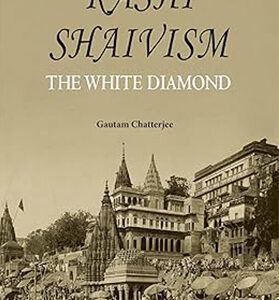
Kashi Shaivism : The White Diamond (Hardcover)
Original price was: ₹1,295.00.₹1,165.00Current price is: ₹1,165.00.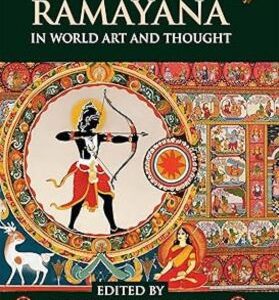
Ramayana in World Art and Thought
Original price was: ₹2,995.00.₹2,695.00Current price is: ₹2,695.00.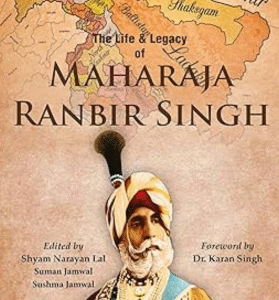
The Life & Legacy of Maharaja Ranbir Singh
Original price was: ₹1,995.00.₹1,795.00Current price is: ₹1,795.00.
Life & Legacy of Maharaja Hari Singh
Original price was: ₹1,495.00.₹1,350.00Current price is: ₹1,350.00. Anatomy of the Raj – Rus...
Original price was: ₹1,295.00.₹1,095.00Current price is: ₹1,095.00.
Reviews
There are no reviews yet.