
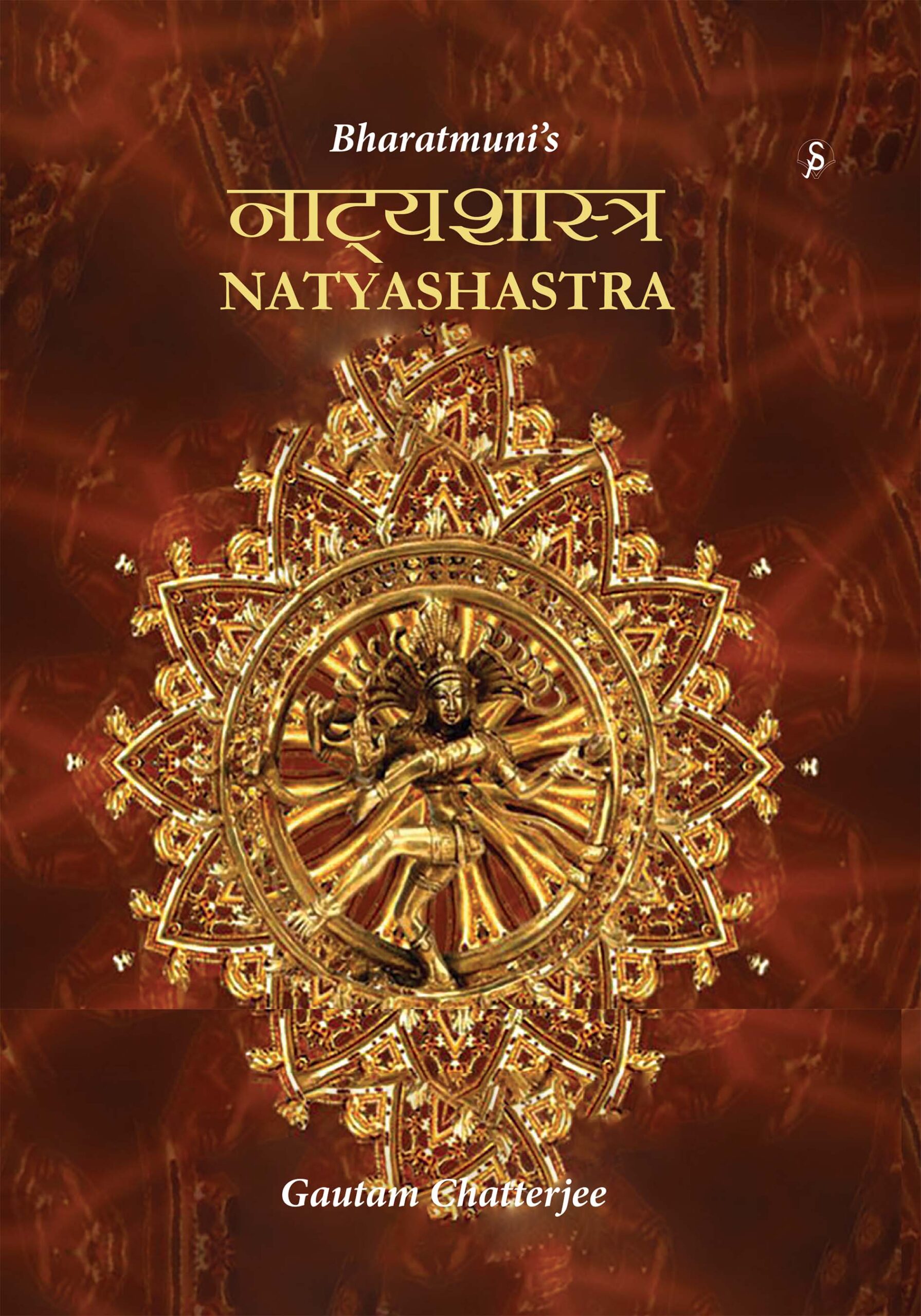
Bharatmuni’s Natyashastra
Original price was: ₹995.00.₹895.00Current price is: ₹895.00.
- Publisher : Shubhi Publications
- Language : English
- Hardcover : 128 pages
- ISBN-10 : 8182905610
- ISBN-13 : 978-81-8290-561-0
- Item Weight : 450 g
- Dimensions : 25 x 18 x 2 cm
- Country of Origin : India
The Natya Shastra, attributed to the sage Bharata Muni, is an ancient Indian treatise on performing arts, encompassing theatre, dance, and music. Composed between 200 BCE and 200 CE, its primary objective is to provide a comprehensive guide to dramatic performance as a means of conveying emotions (rasa) and moral teachings to audiences.
Bharata’s goal was to create a manual that codified the principles of theatrical art to educate, entertain, and spiritually uplift society. He believed that drama could mirror life and express human emotions through stylized gestures (mudras), facial expressions, dialogue, costumes, music, and dance. By doing so, it could help people understand complex philosophical and ethical concepts in an engaging and accessible form.
The Natya Shastra lays out detailed rules for playwriting, stage construction, actor training, music composition, and audience engagement. Bharata emphasized the theory of rasa, or aesthetic flavor, which is central to evoking emotional responses in the viewer.
Ultimately, the objective of the Natya Shastra was not merely entertainment, but the moral and spiritual betterment of society. It viewed the performing arts as a divine science (Natya Veda), given by the gods to teach righteousness, proper conduct, and the essence of life through artistic expression.
There is £4.99 charge for delivery under £50 Orders. Additional charges will be imposed by our couriers for delivery to remote area, a surcharge may be levied to cover carriage to these areas.

Kashi Shaivism : The White Diamond (Hardcover)
Original price was: ₹1,295.00.₹1,165.00Current price is: ₹1,165.00.
Ramayana in World Art and Thought
Original price was: ₹2,995.00.₹2,695.00Current price is: ₹2,695.00.
The Life & Legacy of Maharaja Ranbir Singh
Original price was: ₹1,995.00.₹1,795.00Current price is: ₹1,795.00.
Life & Legacy of Maharaja Hari Singh
Original price was: ₹1,495.00.₹1,350.00Current price is: ₹1,350.00.
 Bharatmuni’s Natyashastra
Original price was: ₹995.00.₹895.00Current price is: ₹895.00.
Reviews
There are no reviews yet.