

Essence of Sanatan Culture: The Eastern Light
Original price was: ₹1,995.00.₹1,695.00Current price is: ₹1,695.00.
- Publisher : Shubhi Publications
- Author : Maharaj Rana Sir Udaibhan Singhji
- Binding : Hardcover
- Edition : 2023
- Language : English
- ISBN-10 : 9394797815
- ISBN-13 : 978-9394797819
- Print length : 378 pages
- Item Weight : 850 g
- Dimensions : 25 x 16 x 3 cm
Vedic culture is known as Sanatan or eternal culture. Sat Sanatan Dharma is not a religion in the sense of one religious doctrine like most religions existing today. They have one person – the founder whose spiritual experiences form the basis of that faith. Sat Sanatan Dharma is based on the spiritual experiences of tens of thousands of spiritually enlightened individuals, men and women, rishis (from the word drish – to see), who transmitted the message of spirituality. At the same time, Kal-time and Deš-place are important, so that this culture adapted to place and time. The Rishis, its transmitters and founders chose to be unnamed naming after their role, such as Vyasa – the compiler, the translator, the one who gathered the knowledge. In this way, they made it possible for their knowledge to be simply, impartially and without prejudice linked to earlier learning, adapted to place and time, and transmitted in an unbroken chain from Master to disciple – Guru parampara. Sanatan has far too many founders to count. The teachings of Sanatan Dharma are known as apauruseya, which means that they are not based on personality, but on principles. This is very important to emphasize since Sat Sanatan Dharma is not a discovery, an invention of any individual or group of individuals but just as scientists do not find the laws of nature but discover them, so these founders, the rishis did not find spiritual laws but discovered them in meditation. Sat Sanatan Dharma is the relationship between the individual and the universe, and dharma also implies eternal, cosmic wisdom, law and action. Sat – true, Sanatan – eternal and universal, Dharma – that which contains and sustains the universe. Thus Sat Sanathan Dharma is what keeps society and civilization in communion through righteous living. In a broader sense, it means getting acquainted with the eternal laws of the universe that govern everything.
There is £4.99 charge for delivery under £50 Orders. Additional charges will be imposed by our couriers for delivery to remote area, a surcharge may be levied to cover carriage to these areas.
| Weight | 1 kg |
|---|

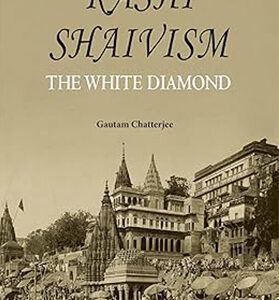
Kashi Shaivism : The White Diamond (Hardcover)
Original price was: ₹1,295.00.₹1,165.00Current price is: ₹1,165.00.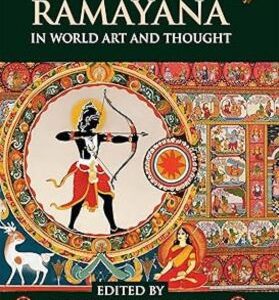
Ramayana in World Art and Thought
Original price was: ₹2,995.00.₹2,695.00Current price is: ₹2,695.00.
The Life & Legacy of Maharaja Ranbir Singh
Original price was: ₹1,995.00.₹1,795.00Current price is: ₹1,795.00.
Life & Legacy of Maharaja Hari Singh
Original price was: ₹1,495.00.₹1,350.00Current price is: ₹1,350.00.
 Essence of Sanatan Culture: Th...
Original price was: ₹1,995.00.₹1,695.00Current price is: ₹1,695.00.
Reviews
There are no reviews yet.