
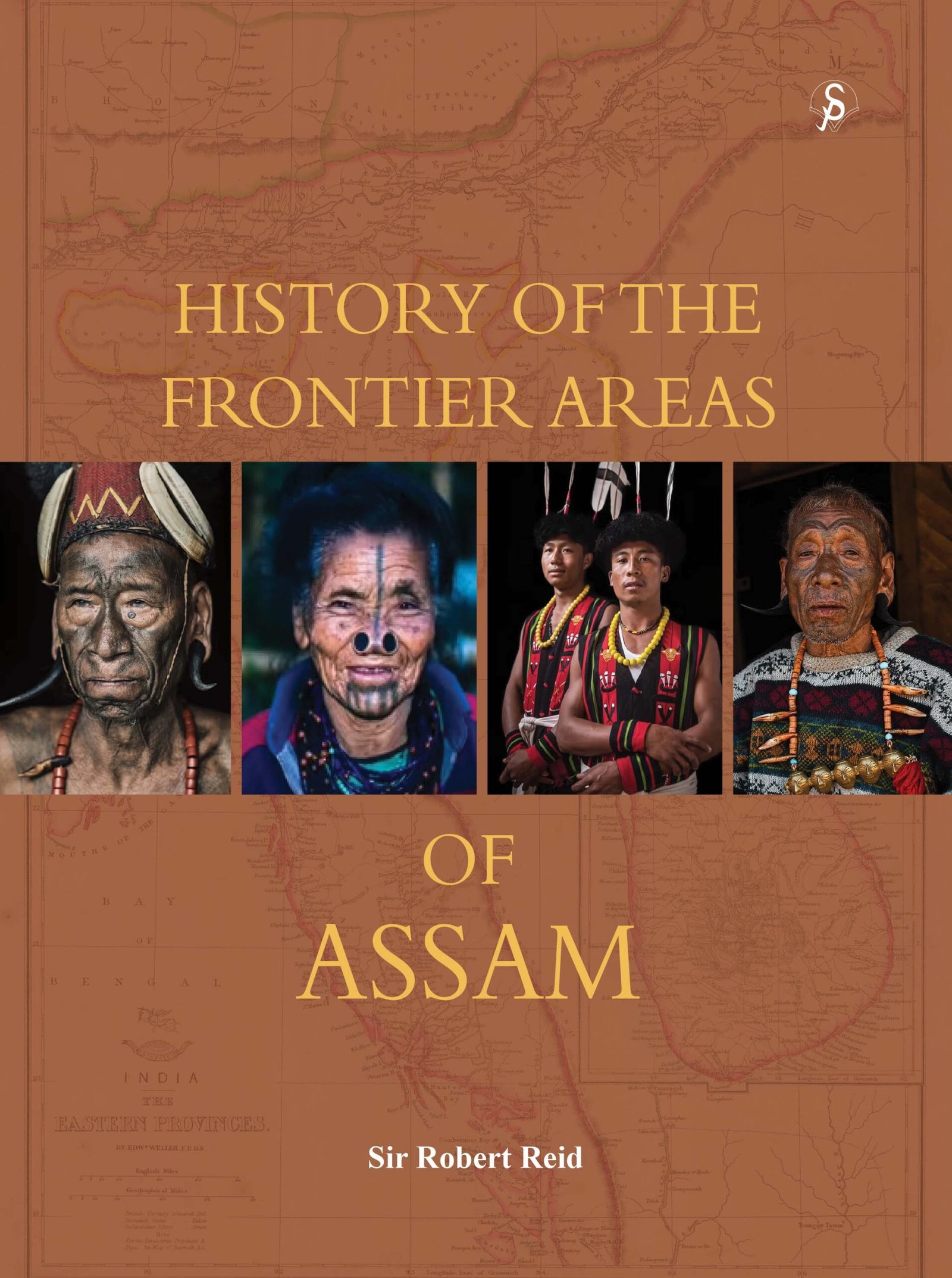
History of the Frontier Areas of Assam
Original price was: ₹1,495.00.₹1,270.00Current price is: ₹1,270.00.
- Publisher : Shubhi Publications
- Author : Sir Robert Reid
- Binding : Hardcover
- Edition : 2025
- Language : English
- ISBN-10 : 8182905656
- ISBN-13 : 978-8182905658
- Print length : 311 pages
- Item Weight : 650 g
- Dimensions : 25 x 17 x 2.5 cm
The frontier areas bordering Assam have a rich and complex history, shaped by geography, tribal cultures, colonial policies, and post-independence developments. These areas include parts of Arunachal Pradesh, Nagaland, Manipur, Mizoram, Meghalaya, and even parts of Bhutan and Myanmar. Ancient and Medieval Period In ancient times, the hills surrounding Assam were inhabited by diverse tribal communities like the Mishmis, Daflas (Nyishis), Nagas, Kukis, and Mizos. These groups maintained limited contact with the Ahom kingdom in the Brahmaputra valley. Their social structures were largely independent, governed by customary laws and tribal chiefs. British Colonial Period With the British annexation of Assam in the 19th century, frontier management became critical. The British created the concept of the “Inner Line” (under the Bengal Eastern Frontier Regulation, 1873) to control entry into tribal areas. This was intended to isolate the tribal populations and prevent conflicts between them and plains settlers. The British treated many of these frontier areas as Excluded or Partially Excluded Areas, giving them special administrative status with limited governance by colonial authorities. Missionary activities, particularly among the Nagas and Mizos, brought education and Christianity, transforming tribal societies. Post-Independence Era After 1947, India adopted a policy of gradual integration and development of the frontier regions. The North-East Frontier Agency (NEFA) was established (now Arunachal Pradesh), while other regions gained statehood (Nagaland in 1963, Meghalaya in 1972, etc.). However, identity politics, autonomy demands, and ethnic insurgencies led to prolonged unrest in some areas. The frontier continues to be geopolitically sensitive due to proximity to China, Myanmar, and Bhutan, and remains culturally distinct and strategically significant for India.
There is £4.99 charge for delivery under £50 Orders. Additional charges will be imposed by our couriers for delivery to remote area, a surcharge may be levied to cover carriage to these areas.
| Weight | 1 kg |
|---|

Kashi Shaivism : The White Diamond (Hardcover)
Original price was: ₹1,295.00.₹1,165.00Current price is: ₹1,165.00.
Ramayana in World Art and Thought
Original price was: ₹2,995.00.₹2,695.00Current price is: ₹2,695.00.
The Life & Legacy of Maharaja Ranbir Singh
Original price was: ₹1,995.00.₹1,795.00Current price is: ₹1,795.00.
Life & Legacy of Maharaja Hari Singh
Original price was: ₹1,495.00.₹1,350.00Current price is: ₹1,350.00.
 History of the Frontier Areas ...
Original price was: ₹1,495.00.₹1,270.00Current price is: ₹1,270.00.
Reviews
There are no reviews yet.