
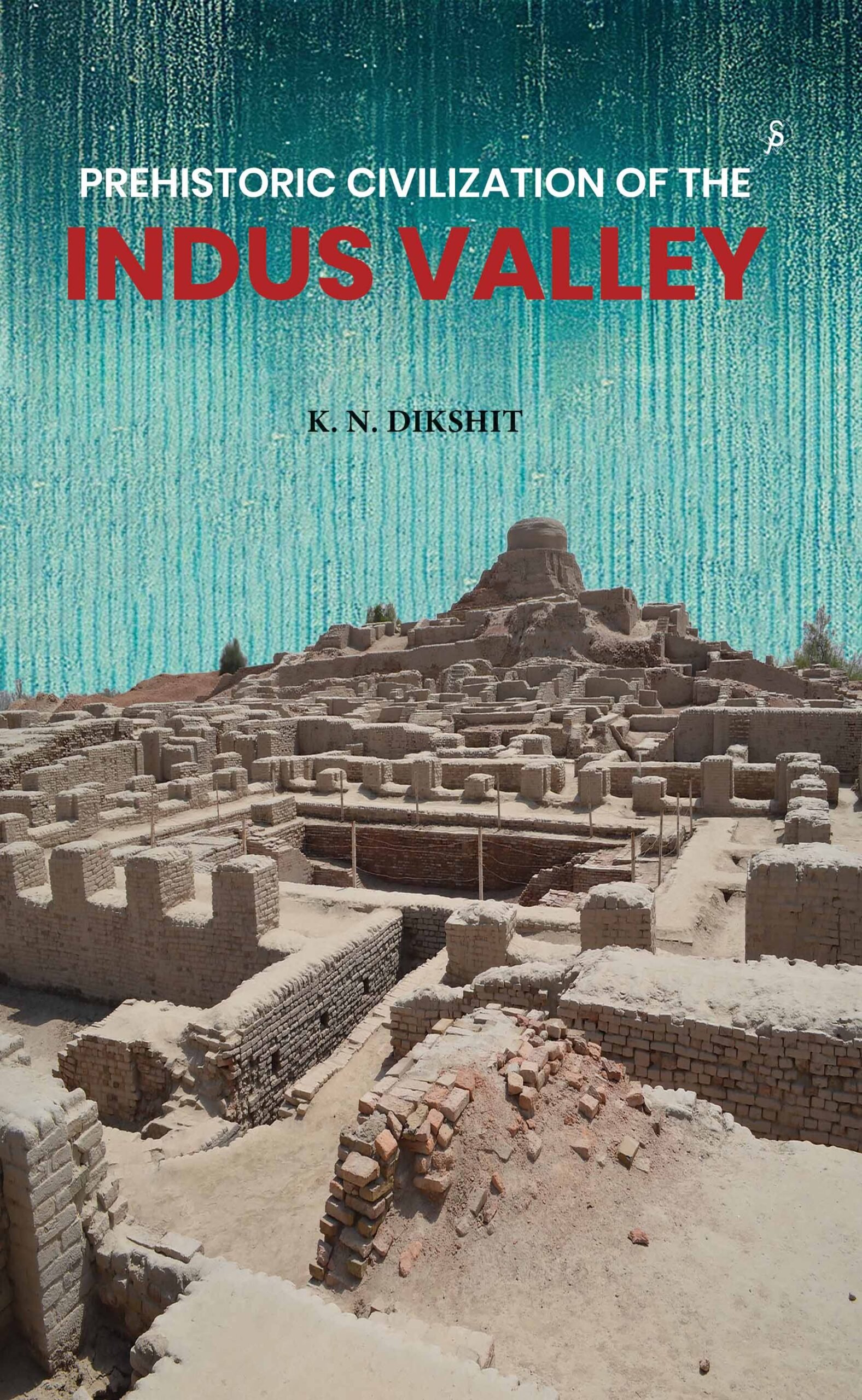
Prehistoric Civilization of The Indus Valley
Original price was: ₹595.00.₹545.00Current price is: ₹545.00.
- Publisher : Shubhi Publications
- Author : K. N. Dikshit
- Binding : Hardcover
- Edition : 2025
- Language : English
- ISBN-10 : 8182905133
- ISBN-13 : 978-8182905139
- Print length : 104 pages
- Item Weight : 350 g
- Dimensions : 23 x 15 x 1.5 cm
The Indus Valley Civilization, also known as the Harappan Civilization, thrived around 2600 to 1900 BCE in present-day Pakistan and northwest India. It was one of the world’s earliest urban cultures, notable for its advanced city planning, including grid-pattern streets, drainage systems, and well-planned buildings. Major cities like Harappa and Mohenjo-daro showcased sophisticated architecture and public structures. The people engaged in agriculture, trade, and craftsmanship, producing beads, seals, and pottery. They used a yet-to-be-deciphered script and had a socially organized society with evidence of both religious practices and economic prosperity. The Indus Valley’s decline around 1900 BCE remains a mystery, possibly due to climate change or shifts in river patterns. Despite its collapse, the civilization’s legacy influenced later cultures in South Asia.
There is £4.99 charge for delivery under £50 Orders. Additional charges will be imposed by our couriers for delivery to remote area, a surcharge may be levied to cover carriage to these areas.
| Weight | 0.5 kg |
|---|

Kashi Shaivism : The White Diamond (Hardcover)
Original price was: ₹1,295.00.₹1,165.00Current price is: ₹1,165.00.
Ramayana in World Art and Thought
Original price was: ₹2,995.00.₹2,695.00Current price is: ₹2,695.00.
The Life & Legacy of Maharaja Ranbir Singh
Original price was: ₹1,995.00.₹1,795.00Current price is: ₹1,795.00.
Life & Legacy of Maharaja Hari Singh
Original price was: ₹1,495.00.₹1,350.00Current price is: ₹1,350.00.
 Prehistoric Civilization of Th...
Original price was: ₹595.00.₹545.00Current price is: ₹545.00.
Reviews
There are no reviews yet.