
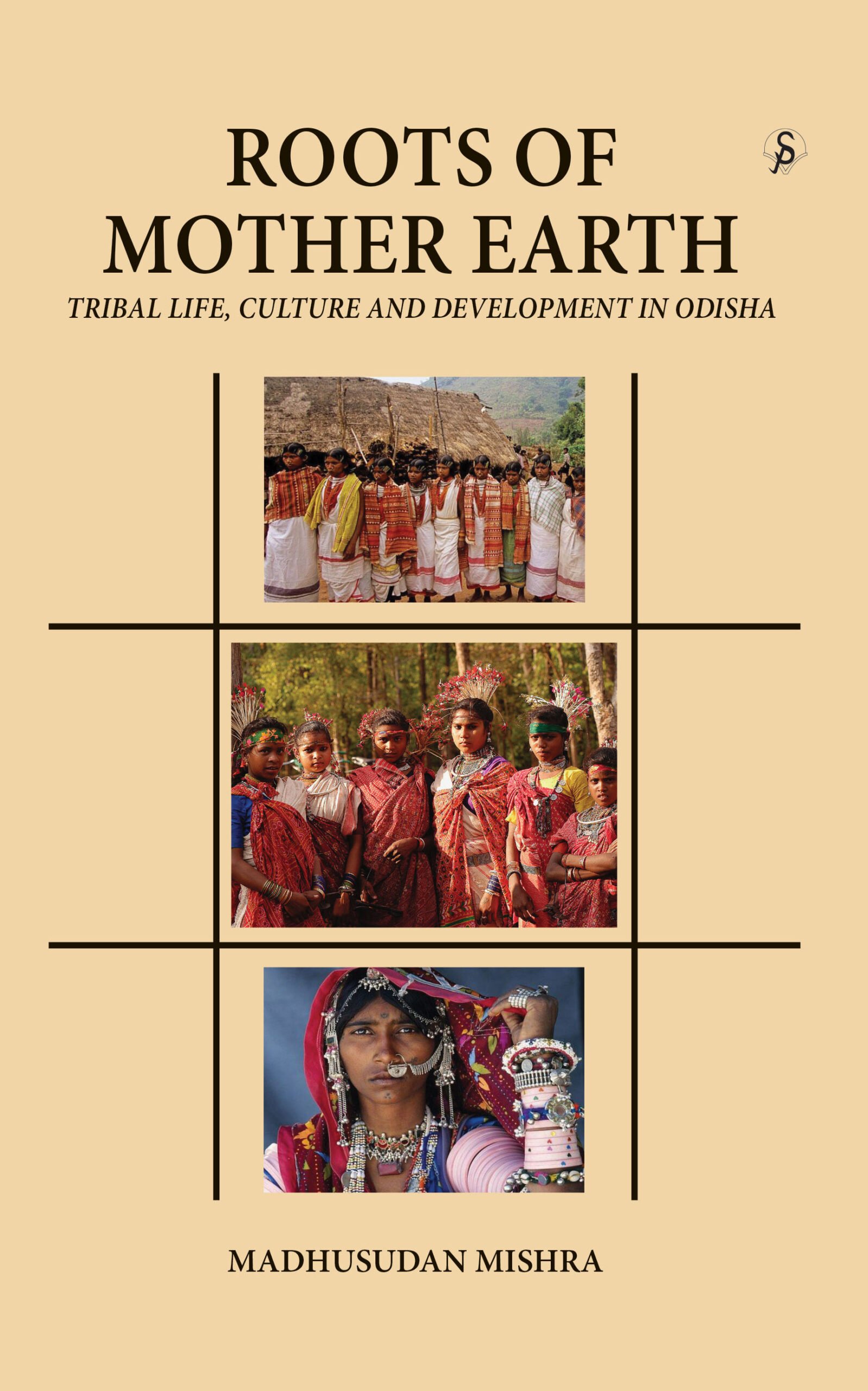


ROOTS OF MOTHER EARTH: TRIBAL LIFE, CULTURE AND DEVELOPMENT IN ODISHA (Hardcover)
Original price was: ₹995.00.₹895.00Current price is: ₹895.00.
- Publisher : Shubhi Publications
- Publication date : 21 April 2026
- Language : English
- Print length : 272 pages
- ISBN-10 : 8182906849
- ISBN-13 : 978-8182906846
- Item Weight : 500 g
- Dimensions : 23 x 15 x 2 cm
- Country of Origin : India
- Packer : Shubhi Publications
Sri Madhusudan Mishra, IAS (Retd.) is a distinguished civil servant, seasoned administrator, scholar, and committed practitioner of people-centric and inclusive development. With a career spanning several years in the Indian Administrative Service, he has served the Government of Odisha in diverse and challenging capacities, leaving a lasting imprint through governance marked by empathy, integrity, and innovation. He served as District Collector and District Magistrate in three districts of Odisha—Nayagarh, Boudh, and Sonepur—each presenting distinct administrative, cultural, and developmental contexts. Across these assignments, Sri Mishra demonstrated an exceptional ability to combine administrative discipline with human sensitivity, ensuring that governance remained responsive to the aspirations of the people, particularly those living at the margins. His tenure as Collector of Nayagarh emerged as a defining phase in his professional journey. During this period, he developed a deep and nuanced understanding of the district’s cultural heritage, social dynamics, and developmental challenges. His leadership style in Nayagarh was characterised by transparency, participatory governance, innovation, and direct citizen engagement. He strongly believed that administration should not remain confined to offices but must reach villages, households, and individuals. His initiatives during this period strengthened public trust in institutions and reinforced the idea that development becomes meaningful only when people feel heard and respected. As Collector of Boudh and Sonepur, districts with significant rural and tribal populations, Sri Mishra’s engagement with tribal development acquired greater depth and practical orientation. These districts exposed him closely to the lived realities of Adivasi communities—their governance systems, cultural traditions, ecological wisdom, and development concerns. Rather than approaching tribal development solely through a welfare lens, he consistently advocated for rights-based, participatory, and culturally sensitive approaches. His work reflected a strong belief that tribal communities are not passive beneficiaries, but partners in development and custodians of invaluable indigenous knowledge systems. A practitioner by conviction, Sri Mishra was deeply involved in field-level implementation of programmes related to tribal welfare, forest and land rights, rural livelihoods, education, health, nutrition, women and child development, and social justice. His administrative interventions sought to strike a balance between state policies and local realities, ensuring that development initiatives strengthened dignity, identity, and opportunity. His approach was informed by constant dialogue with community elders, women, youth, and grassroots institutions, allowing governance to align more closely with indigenous governance structures. Throughout his career, Sri Mishra also played an important role in promoting institutional reforms and digital transformation in governance. He supported innovations that enhanced transparency, service delivery, and administrative efficiency while remaining accessible to ordinary citizens. His work consistently demonstrated that technology and modern systems must ultimately serve human well-being. Beyond administration, Sri Madhusudan Mishra is a thoughtful scholar and writer, with a strong academic orientation rooted in social sciences and public policy. His analytical mindset enables him to document social realities with authenticity while offering critical insights into governance, development, and cultural transformation. He possesses a rare ability to bridge lived administrative experience with reflective scholarship, making his writings both grounded and insightful. After retirement from active civil service, Sri Mishra continues his engagement with public life and education as the Registrar of Jagadguru Kripalu University, Cuttack, Odisha. In this role, he contributes to institution-building, academic governance, and the promotion of holistic education rooted in Indian knowledge systems and contemporary relevance. His association with higher education reflects his belief that universities must serve as spaces for ethical leadership, social responsibility, and inclusive development. His deep and sustained interest in tribal culture, governance, and development finds expression in his writings and research. He views tribal societies not merely as subjects of study, but as living communities whose values of harmony, sustainability, and collective responsibility hold vital lessons for modern governance. His work seeks to amplify tribal voices, preserve cultural heritage, and inform policy discourse with empathy and realism. Sri Mishra’s writings are informed by humility and lived experience. He believes that leadership is not defined by authority alone, but by the ability to listen, learn, and serve. His book Roots of Mother Earth: Tribal Life Culture and Development in Odisha reflects this philosophy—bringing together culture, governance, and development into a coherent narrative that honours indigenous wisdom while engaging with contemporary challenges. Known for his discipline, simplicity, and people-first attitude, Sri Madhusudan Mishra continues to inspire administrators, scholars, students, and development practitioners. His journey stands as a reminder that meaningful governance is rooted not in power, but in compassion; not in distance, but in dialogue; and not in control, but in trust.
There is £4.99 charge for delivery under £50 Orders. Additional charges will be imposed by our couriers for delivery to remote area, a surcharge may be levied to cover carriage to these areas.

Kashi Shaivism : The White Diamond (Hardcover)
Original price was: ₹1,295.00.₹1,165.00Current price is: ₹1,165.00.
Ramayana in World Art and Thought
Original price was: ₹2,995.00.₹2,695.00Current price is: ₹2,695.00.
The Life & Legacy of Maharaja Ranbir Singh
Original price was: ₹1,995.00.₹1,795.00Current price is: ₹1,795.00.
Life & Legacy of Maharaja Hari Singh
Original price was: ₹1,495.00.₹1,350.00Current price is: ₹1,350.00.
 ROOTS OF MOTHER EARTH: TRIBAL ...
Original price was: ₹995.00.₹895.00Current price is: ₹895.00.
Reviews
There are no reviews yet.